



Cam here 👋 bringing you your daily dose of what people are doing – good, bad, and otherwise – in the world of politics. We’re diving into the stories you won’t see anywhere else. And remember, you can also keep up with me over on TikTok and Bluesky.

What Happened
New York City Mayor Zohran Mamdani’s slate of fiery progressives swept establishment-backed Democrats in the state’s congressional primaries on Tuesday, ousting two sitting congressmen in a resounding show of force for the democratic socialist leader of America’s largest city, who is fighting to reshape the Democratic Party in New York and beyond.
Tuesday’s primaries represented a major political gamble for the 34-year-old mayor, whose strength is surging, and a potential headache for Democratic leaders, who fear that Mamdani and his loyalists may push the party too far left ahead of November’s midterm elections — when voters across the nation will decide which party controls Congress for the last two years of Trump’s final term.
The noticeable shift to the left by Democratic primary voters comes at a time when Trump-backed partisan gerrymandering is pushing Republican-majority districts farther to the right. The gambit could backfire, however, as is evidenced by New York’s primary elections, as well as the steady stream of upset victories Democrats have won in special elections since Trump was reelected.
Even in races where Republicans win, they’re doing so by much smaller margins than in previous years. It’s a clear sign from voters that they don’t think the party in power is listening to their needs. It’s led to Democrats regaining control of the Michigan state senate, the Virginia House, and chipping away at Republican supermajorities in Arkansas and Florida.
Heather Williams, president of the Democratic Legislative Campaign Committee, believes Republicans may have overplayed their hand, and 2026 could be the year Republicans lose control of a number of state legislatures where they hold narrow majorities.
*The Associated Press contributed to this story.

 Tiktok failed to load.
Enable 3rd party cookies or use another browser

Since day one of Trump’s political career, people have desperately attempted to normalize his absurd abuses of power and blatant corruption – and 10 years later, much of corporate media remains a victim of their own attempts to return to a sense of normalcy.
It’s time to stop sane-washing the insanity.
Timeline: Epstein’s 30-year friendship with billionaire Leon Black
The House Oversight Committee is scheduled on Friday to interview a fourth implicated billionaire as part of its investigation into the government’s handling of the case against Jeffrey Epstein’s international human trafficking ring.
The transcribed interview will be the first time Wall Street billionaire Leon Black has appeared before Congress to answer questions about his relationship with Epstein, although it is far from the first time he’s been asked to testify. Black successfully avoided subpoenas from prosecutors as a defendant in 2021 and a witness 2026, when civil cases he was named in were settled before he was compelled to speak.
Black’s long, sordid relationship with Epstein is of particular interest to congressional investigators, who view his role as friend and financier as crucial to understanding how a failed high school teacher came to own two islands, develop close relationships with the world’s richest and most powerful people, amass a personal fortune of over $500 million, and operate an international trafficking and money laundering network seemingly undisturbed for nearly 30 years.
US Sen. Ron Wyden (D-OR), who launched an investigation into Epstein’s finances in 2021, has uncovered a number of suspicious financial entanglements between Black and Epstein. In addition to overpayments for tax services to the tune of tens of millions of dollars, Wyden claims Black “appears to have” used Epstein as an intermediary to avoid paying taxes on payments made to women he had affairs with. He’s also raised questions surrounding Epstein’s use of Black’s transactions to launder money to his trafficking accomplices in Eastern Europe.
“It appears that Epstein kept close tabs of women who Black had reached settlements/NDAs with and reached out to Russian government officials to help Black with these so-called problems,” Wyden said in a statement. “Epstein even appears to have acted as a middleman for Black to pay women on Black’s behalf, raising concerns of potential money laundering.”
Wyden’s inquiries into Epstein and Black’s financial dealings have so far been stymied by US Treasury Secretary Scott Bessent, who has refused to grant congressional investigators access to confidential financial documents. The Treasury Department also provided Wyden extremely limited access during the Biden administration — just one day onsite — and in that short period, investigators identified roughly $1 billion in suspicious transactions flowing through Epstein’s accounts. Wyden has requested expanded access from Bessent, who in turn has threatened to launch financial investigations into Wyden.
Black’s interview with the Oversight Committee could provide a glimpse into Epstein’s financial web, as the two were monetarily entangled from 1997 to 2018.
To better understand Black’s involvement in Epstein’s dealings, COURIER created a timeline of their relationship based on legal filings, financial records, internal correspondence, and other evidence contained in the Epstein Files, portions of which have been published in accordance with the Epstein Files Transparency Act.
Mid-1990s
Leon Black first meets Jeffrey Epstein.
1997
Black appoints Epstein as the sole director of the Black Family Foundation, an institution he set up as the vehicle for his charitable giving. Epstein remained on the board until 2012.
2002
A woman claimed in a lawsuit that Black raped her in 2002 when she was 16 years old at Epstein’s Manhattan mansion. The case was later dropped after the judge concluded the plaintiff had falsified evidence.
2003
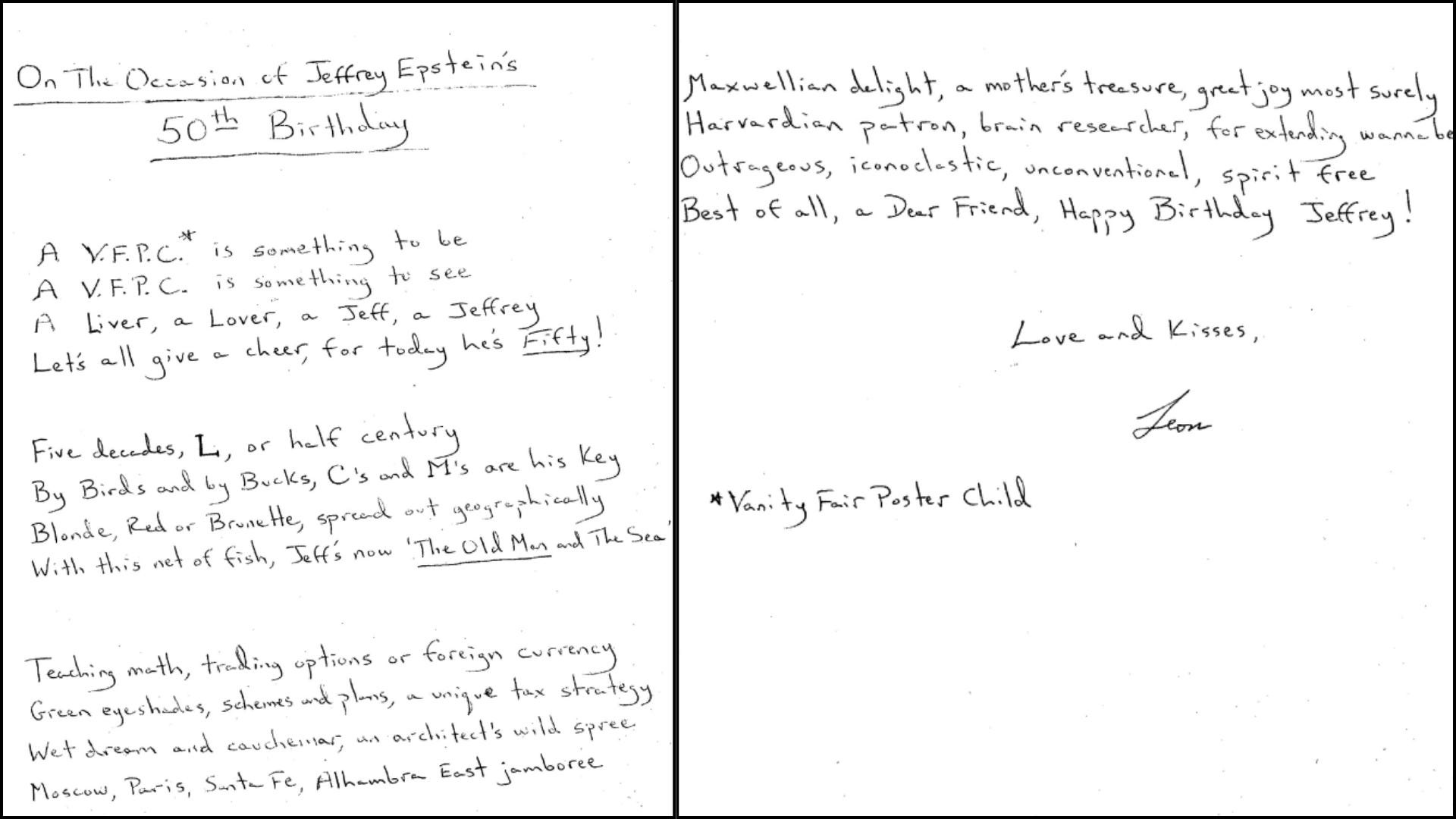
Black joins a handful of Epstein’s close associates in contributing to a scrapbook commemorating Epstein’s 50th birthday.
2006
Epstein is indicted by a Florida grand jury and charged with soliciting prostitution.
2008
A woman named Guzel Ganieva claims she met Black at an International Women’s Day event, where he offered to help her make professional connections. Months later, Ganieva alleged in a lawsuit, Black flew her against her will to meet Jeffrey Epstein in Palm Beach, where Epstein, Black, and Sarah Kellen tried to pressure her into having a threesome with the two men. The lawsuit was dismissed by a Manhattan Supreme Court judge in May 2023, according to CNBC.
Later that year, Epstein pleads guilty to soliciting prostitution from a minor.
2009
According to an ongoing investigation by the Senate Finance Committee, Black directly paid a Siberian woman named Irina Chernova hundreds of thousands of dollars over a four-year period. After 2012, Black continued making payments to Chernova through Epstein, using him as an intermediary to avoid paying the federal tax on gifts.
A full account of Chernova’s involvement with Epstein and Black can be read at American Freakshow.
On the day Epstein’s prison sentence ends for solicitation of a minor prostitute, Black sends him a message stating “Happy Days are Here Again”.
2011
Financial Trust, Epstein’s financial advisory firm, invests in an environmental company where two of Black’s sons served as board members.
Throughout 2011 and 2012, Epstein helps cultivate a relationship between Black and one of his alleged recruiters, Victoria Housez, according to an in-depth analysis conducted by American Freakshow authors Nina Burleigh and Katie Chenoweth. Black gifts Housez more than $50,000, and she privately discusses with Epstein ways she could convince Black to bestow more of his fortune to her.
In a statement to American Freakshow, Black’s attorney denied wrongdoing, but did not respond to the allegations surrounding Housez or Chernova.
2012
Black formally hires Epstein as a tax advisor, a role for which he is compensated $170 million over six years. While on a family vacation, Black sails to Epstein’s island, allegedly to attend a barbecue.
2013
Epstein establishes Southern Trust in the US Virgin Islands after successfully negotiating lucrative tax breaks with territory officials.
Black pays him $50 million for tax services through said company.
2014
Black pays Epstein $70 million for tax services.
2015
Black made $8 million in payments from 2015 to 2018 to Eastern European women, transactions that Wyden uncovered in 2026, and said “were potentially involved in prostitutions and possible victims of
Epstein’s trafficking scheme.”
As a result of a deal brokered by Epstein, Black agrees to pay Ganieva $18 million over a 15-year period in exchange for her signing an NDA related to their relationship. Shortly after Epstein helps Black negotiate the payout plan for his mistress’ discretion, Black pays Epstein $20 million. He pays an additional $30 million for tax services.
2016
The IRS begins an audit of the finances of Black and Anastasiya Siro, a woman he had been having an affair with. Black reported $600,000 in gifts to Siro when filing his taxes, but she did not report or pay taxes on the amount. Epstein steps in to resolve the matter for both Black and Siro, who he had known since 2010.
2017
Chernova contacts Epstein about a new arrangement between her and Black, in which she was told payments would come through Epstein. Sen. Ron Wyden (D-OR), ranking member of the Finance Committee, believes this to be an example of one of the many avenues Epstein used to launder money.
2018
Among a number of growing disagreements, Black demands Epstein pay back a $30 million loan. He ultimately repaid only $10 million, according to the New York Times.
2019
In July, Epstein is arrested on federal charges of sex trafficking. Later that month, Black tells Apollo Global Management investors he only had “a limited relationship” with Epstein.
2020
In January, US Virgin Islands Attorney General Denise George files a civil forfeiture lawsuit against Epstein’s estate, in which she alleges that Epstein trafficked girls and women in the Caribbean and deceived USVI officials to abuse the territory’s tax code for personal gain. Months later, she announces plans to subpoena Black for his role in subsidizing Epstein’s illegal activity.
Apollo Management Group hires the law firm Dechert to conduct an independent review of Black’s relationship with Epstein and determine any potential harm it may have caused to investors.
2021
Dechert concludes its review of Black and determines no wrongdoing. Months later, Black resigns from Apollo due to the “relentless” effects of Dechert’s report. The report omits most details around Black’s financial arrangements with Ganieva and Siro, as was later reported by the New York Times.
2022
Cheri Pierson files a lawsuit against Black and Epstein’s estate, alleging sexual abuse in 2002. Pierson dropped the suit in 2024.
2023
In January, Black settles with the US Virgin Islands for $62.5 million and admits that “Epstein used the money Black paid him to partially fund his operations in the Virgin Islands.”
2025
The government releases portions of its investigation into Epstein, as required by the Epstein Files Transparency Act. The release includes sensitive details about Black’s finances, and previously unknown details about his relationship with Epstein.
2026
As a result of the information revealed in the Epstein Files, Apollo Global Management shareholders in March file a class action lawsuit against Black, accusing him of fraud by lying about his relationship with Epstein.
In May, Black is scheduled for a deposition for another Epstein-related civil lawsuit, filed by his victims against Bank of America. The parties involved reach a settlement agreement days before Black is due to testify.
Black is currently scheduled to appear for a transcribed interview on June 26 with the House Oversight Committee as part of its ongoing investigation into the government’s handling of the Epstein case.

It’s easy for individual members of Congress to get overlooked by national outlets as they quietly skate to reelection again, and again, and again. The following is an overview of different congressional representatives you may not have heard of, with fun facts about their origin stories they’ve tried to keep out of the public narrative.
US Rep. David Valadao, California’s 22nd Congressional District
Since taking office in 2012, Rep. Valadao has:
Listed as both one of the poorest and richest members of Congress, due to his practice of taking out millions of dollars in debt, then filing for protected bankruptcy to retain his assets
Sponsored 88 pieces of legislation, one of which has been signed into law
Lost his seat for one term in 2018 by less than 1,000 votes
Voted to repeal the Affordable Care Act, otherwise known as Obamacare
Potentially kicked 40% of his district off its health insurance in order to subsidize billionaire tax cuts
Catered legislation to benefit a wealthy donor who “uses more water than every home in LA combined”
Refused to pay a lawsuit settlement of $325,000 for paying farm workers less than minimum wage
Maintained generally terrible working conditions on his farms, resulting in injuries and amputations
Fun Facts
Valadao has spent the last decade walking on a Trumpian tightrope, opposing nearly everything about the President as a person but supporting every fiber of his agenda. The balancing act began in 2016, when Valadao withdrew his endorsement of Trump on the grounds that he “denigrates people based on their ethnicity, religion, or disabilities.” His conviction didn’t extend to policymaking, however; Valadao voted in line with Trump 98% of the time and shielded the president from financial transparency.
This unholy alliance temporarily cost Valadao his seat when he was voted out in 2018. He won back in 2020, after receiving Trump’s endorsement, but the latter’s loss that year set the stage for Valadao’s loyalties to be tested again. After Trump incited the Jan. 6, 2021, insurrection in an attempt to retain power, Valadao was one of 10 Republicans who voted in favor of impeachment. He later went against his party by voting to establish the January 6th Committee.
The two mended fences eventually, and Valadao proudly attended the second inauguration of a man he believed goaded a violent mob into attacking the US Capitol so he could overturn the 2020 election results.
Support our journalism at COURIER
Democracy dies behind a paywall, which is why our journalism is — and always will be — free.
But to keep our commitment to the free access to information, we need support from those who have the means, believe in our mission, and support our unique model.