

Trump's alleged money laundering protected under tax immunity scheme
ALSO INSIDE: 7 Takeaways from new report on Epstein’s Zorro Ranch

This newsletter is brought to you by Action Network Boost, a new set of features built for the most advanced digital programs.
Cam here 👋 bringing you your daily dose of what people are doing – good, bad, and otherwise – in the world of politics. We’re diving into the stories you won’t see anywhere else. And remember, you can also keep up with me over on TikTok and Bluesky.

Since day one of Trump’s political career, people have desperately attempted to normalize his absurd abuses of power and blatant corruption – and 10 years later, much of corporate media remains a victim of their own attempts to return to a sense of normalcy.
It’s time to stop sane-washing the insanity.
What Happened
A court filing this week revealed a major factor in the president’s adamancy that he and his primary business be given immunity from IRS audits: money laundering.
President Donald Trump sued Capital One last year over the financial institution’s decision in 2021 to close nearly 400 accounts connected to the president and his businesses. Trump’s lawyers argued the accounts were closed due to “political discrimination” following his impeachment for inciting the January 6 insurrection. Capital One, however, says the decision had nothing to do with politics and instead stemmed from concerns the accounts were being used to launder money.
“The closures were the result of months of analysis and a careful review by Capital One’s [anti-money laundering] team in accordance with bank policies and regulatory guidance,” the court filing states. “Plaintiffs cannot meaningfully criticize the robust process undertaken by Capital One’s [anti-money laundering] professionals with decades of law enforcement experience in deciding to close the accounts.”
The findings of Capital One’s internal investigation have not been made public, and it’s unknown whether the suspicious activity was reported to the US Financial Crimes Enforcement Network (FinCEN). No federal investigation is currently possible, however, because acting Attorney General Todd Blanche has granted Trump tax immunity for any financial crimes committed before May 2026.
In a settlement agreement between Trump and his administration, Blanche “forever barred” the federal government from pursuing any legal claims against Trump, his two eldest sons, or the Trump Organization that would involve any of their tax returns. Without those records, it would be impossible to investigate alleged crimes reported by Capital One or any other financial institution. Blanche’s order also saved Trump from being required to pay back at least $100 million in back taxes.
It’s unclear if Blanche’s prohibition on auditing Trump will remain in effect after the president’s term ends, or if it can legally be in effect at all. A federal judge in July declared Blanche’s agreement illegal, and US Sens. Elizabeth Warren (D-MA) and Ron Wyden (D-OR) wrote a letter to Treasury Secretary Scott Bessent seeking verification that it had not gone into effect.
“The Department of Justice lacks the authority to declare in a settlement that the IRS will drop audits unrelated to the lawsuit being settled. Federal law also bars the President and White House officials from requesting that the IRS end audits into particular taxpayers,” the letter states. “The IRS should not and cannot implement illegal orders.”
What’s less clear is whether FinCEN would take any action to investigate Trump’s alleged money laundering, even if it was reported by Capital One. The agency’s history of prosecuting blatant criminal activity is abysmal, at best. Convicted sex trafficker Jeffrey Epstein made over $1.8 billion in suspicious money transfers over the course of 20 years and was never investigated. A 2020 whistleblower revealed that FinCEN and major financial institutions routinely ignore illegal transactions that fund organized crime, terror networks, and human and drug trafficking because of the profit that’s generated from these transactions.
Despite that record, Trump is one of the few financial criminals FinCEN has successfully prosecuted — on multiple occasions. The first instance was in 1998, when Trump Taj Mahal was fined nearly $500,000 for consistently failing to file currency transaction reports on its customers. Casinos are required to keep a record of anyone who makes transactions larger than $5,000. Without that information, it’s impossible to trace money flowing in and out of casinos, making them a premiere destination for money laundering.
In one month alone, “Trump Taj Mahal failed to file 30 CTRs totaling $500,000, stemming from the Casino’s failure to adequately monitor and report when a patron inserts more than $10,000 into a slot machine in a given day.”
Trump’s casino continued ignoring anti-money laundering laws and was fined another $10 million in 2015. Investigators found that it had allowed millions of dollars in transactions to go untraced for at least a decade, and had “willfully violated the program, reporting, and recordkeeping requirements of the Bank Secrecy Act,” even after being warned several times.
Supercharge your program with Action Network Boost
Powerful features for the most advanced digital programs, including deliverability reporting, priority support, a new way to dig deeper into your data, simplified email customization, and much, much more. Sign up and get 10% off Boost here >

New Mexico releases first report on Epstein’s Zorro Ranch
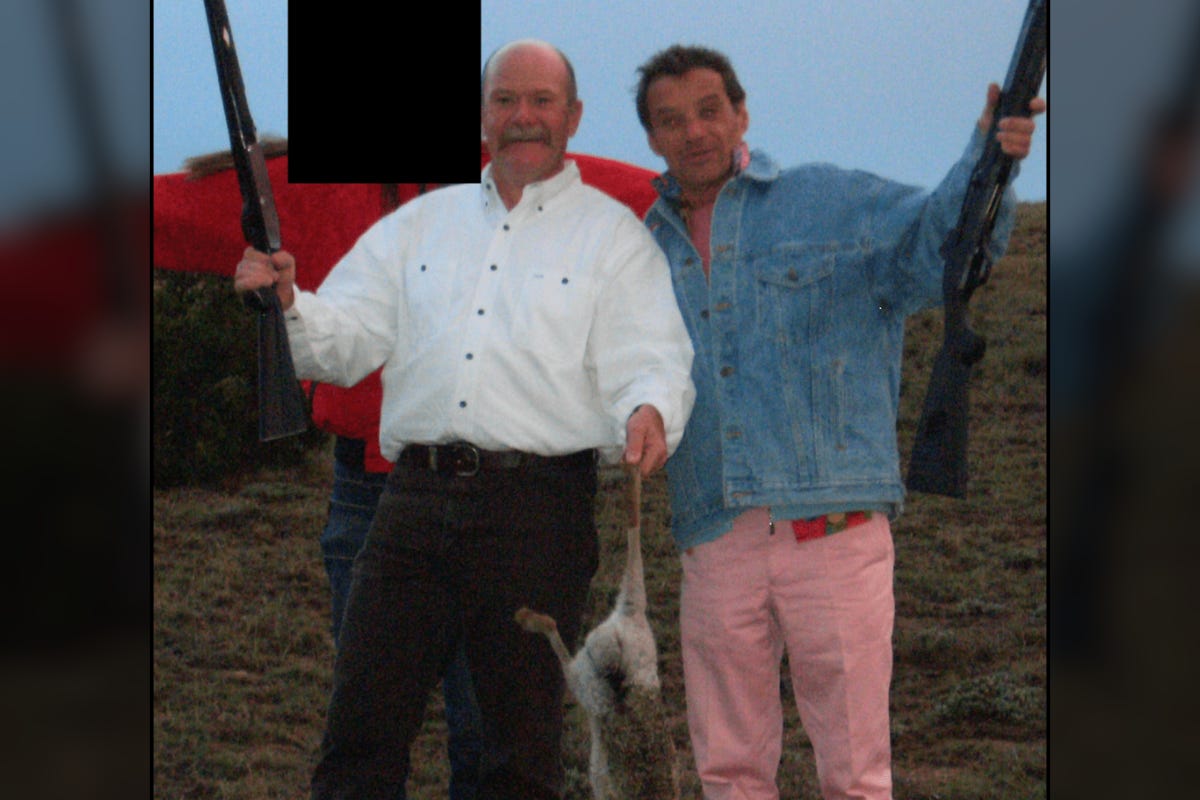
On Wednesday, a commission established by the New Mexico Legislature to investigate crimes committed at Jeffrey Epstein’s Zorro Ranch released its initial findings and issued subpoenas to three state agencies and a local spa where Epstein preyed on women.
The Survivors’ Truth Commission’s brief meeting included an overview of its 110-page interim report led by state Rep. Andrea Romero, as well as testimony from Rachel Benavidez, one of several massage therapists Epstein hired and then raped once they arrived at Zorro Ranch. Benavidez was first brought to the ranch in 1999, when she was 25.
“While my survivor sisters continue to show up in Washington, demanding justice and accountability, questioning the powers that be about the withholding of justice, I, too, am here today asking these very same questions,” Benavidez said. “There is a mountain of evidence this government has been sitting on for decades. We don’t need more paper files sitting as artifacts. We need the black-and-white words and names within those files to jump off the page and become real-time answers and actions.”
Benavidez is one of more than 1,000 women the US Department of Justice believes were abused as part of Epstein’s international trafficking operation. Despite the scale of the abuse, coupled with the roughly 6 million investigative records compiled as part of the government’s case against Epstein, the Trump administration concluded that only two people were responsible for the crimes committed.
No previous investigation into Epstein’s criminal network examined what happened in New Mexico, but state officials are hopeful that what is uncovered by the Commission’s investigation will prompt prosecutors to pursue additional charges against accomplices and co-conspirators.
Here are the seven takeaways from the Commission’s interim report:
1. Epstein first set up shop in New Mexico
Before his international sex trafficking operation took root in Manhattan and the US Virgin Islands, Epstein bought nearly 8,000 acres of land just outside Albuquerque in 1993. Over the next 25 years, at least 30 girls and women were brought there and abused by Epstein and his co-conspirators. As is detailed in the report, local law enforcement during those years — including after Epstein’s first conviction — “played a passive role in investigating him,” and allowed his trafficking empire to grow undisturbed.
2. State charges against co-conspirators appear unlikely
Based on what’s been uncovered so far, it’s unlikely that criminal charges for state crimes will result from this investigation. The Commission identified eight chargeable offenses for the crimes uncovered so far, most with a statute of limitations of only five or six years. Witness testimony and evidence currently available place the alleged criminal conduct at Zorro Ranch between 1996 and 2012.
Two potential charges — criminal sexual penetration and criminal sexual contact — remain prosecutable until a victim turns 35 if they were a minor at the time of the assault. The Commission has recommended amending state law to remove the statute of limitations on trafficking for future cases, though restrictions in the state constitution prevent such a change from applying retroactively.
The Commission has also recommended the legislature close New Mexico’s age of consent loophole, which allowed Epstein to stay off the state’s sex offender registry after his 2008 conviction.
3. Zorro Ranch was a 50,000-square-foot compound with a live-in staff and shooting range
Epstein got an incredible deal on the land purchase, thanks in part to his now-convicted accomplice Ghislaine Maxwell, who served as a “disinterested person” in appraising the land. Part of the sweetheart deal included ranching and agricultural leases with the Bureau of Land Management that New Mexico officials didn’t monitor and Epstein failed to uphold.
Over the next six years, Epstein built a sprawling, 50,000-square-foot compound featuring a three-story main residence, eight guest houses, stables, a hangar and airstrip, a helipad “as part of a labyrinth garden,” and a shooting range. The Commission identified 13 Zorro Ranch employees, some of whom lived onsite, were issued cell phones and had access to ranch vehicles. Epstein also installed extensive communications infrastructure.
4. Epstein used his girlfriend’s dental license to order oxygen and anesthetics
Karyna Shuliak, Epstein’s girlfriend at the time of his death and the primary beneficiary of his fortune, was a licensed dentist in New Mexico from 2015 to 2021. She had graduated from Columbia University’s dental school a few years prior — thanks to Epstein’s connections, a reported $5-10 million donation, and $630,000 in tuition payments — and told the New Mexico Regulation and Licensing Department she planned to open a practice called Zorro Smiles at the ranch.
The business never materialized, but Epstein asked Shuliak to have oxygen and anesthetics delivered to the property. The interim report notes that multiple victims said they woke up at the ranch next to medical equipment, though it “is unknown at this time if Shuliak’s dental instrumentation and these accounts are related.”
5. New Mexico officials ignored Epstein for decades
Despite victim testimony pointing to Zorro Ranch as early as 1996, local and federal law enforcement never seriously investigated Epstein’s New Mexico operation. Different departments routinely deferred responsibility to others rather than taking action themselves. The Commission found that local and state officials repeatedly chose to let “others in Miami and in New York do it. As a result, the conduct of Epstein and his co-conspirators in New Mexico went unexamined and unpunished.”
Even while federal prosecutors were building their massive case against Epstein and Maxwell in 2019, cooperation with New Mexico authorities amounted to little more than requisite paperwork. In September of that year, New Mexico Deputy Attorney General Clara Moran sent investigators in the Southern District of New York “materials related to the criminal investigation and potential prosecution of Jeffrey Epstein’s co-conspirators.” The Commission later found that Moran’s office did not retain any copies of the investigative material after it was passed along.
Two months later, Moran’s office offered to assist SDNY in executing a search warrant at Zorro Ranch, suggesting that the property could be seized and funds from its sale could be used to benefit survivors. Neither department applied for a warrant, and the property was sold by Epstein’s estate for $18 million.
6. 24 subpoenas issued, 100,000 records received
The Commission issued four new subpoenas Wednesday to three state agencies and a local spa used by Epstein as a recruiting hub. Earlier this year, it subpoenaed ten other state and local agencies, the Federal Aviation Administration, JPMorgan, Deutsche Bank, and US Attorney’s Offices in New Mexico, New York, Florida, Michigan, South Carolina, and the US Virgin Islands.
About half have complied with their subpoenas, submitting roughly 100,000 records to the Commission. Deutsche Bank has agreed to fully comply, and says it will deliver approximately 60,000 pages of Epstein’s financial records.
7. Several witnesses and victims have come forward since the investigation began
Dozens of survivors and witnesses have contacted the Commission since its investigation began. The number of known individuals abused at Zorro Ranch has grown from 10 to 30, five of whom have their experiences outlined in the interim report. The sheer volume of emails, calls, texts, and in-person encounters with those who wish to speak with the Commission stands in stark contrast to the US Department of Justice, which closed its investigation into Epstein last year, and whose acting attorney general refused to meet with survivors until his job depended on it.
“This was a monster who used power, intimidation, wealth, influence, false pretenses, and a masked disguise to gain access and exploit the one thing that meant everything to me at that time — my hard-earned career. He exploited us all. And too many people within his network scoffed at the idea that he could possibly be a sexual predator and a criminal,” said Benavidez. “Let there be no mistake — I use this survivor platform to stand on the right side of every survivor’s journey toward truth and justice. I am holding on to faith that real accountability will be achieved.”
Support our journalism at COURIER
Democracy dies behind a paywall, which is why our journalism is — and always will be — free.
But to keep our commitment to the free access to information, we need support from those who have the means, believe in our mission, and support our unique model.
Supercharge your program with Action Network Boost
Powerful features for the most advanced digital programs, including deliverability reporting, priority support, a new way to dig deeper into your data, simplified email customization, and much, much more. Sign up and get 10% off Boost here >
Bullshit. Do Something.
This is pretty good reporting. I've only read one other source that contains this information (and more) – The Pugalist, journalist and NM native, Alisa Valdes-Rodriguez's platform on Substack.
Valdes-Rodriguez points to some interesting facts about the Truth Commission. If her reporting is correct, the TC has several issues worthy of concern.