



Below the Belt(way)
Cam here 👋 bringing you your daily dose of what people are doing – good, bad, and otherwise – in the world of politics. We’re diving into the stories you won’t see anywhere else. And remember, you can also keep up with me over on TikTok and Bluesky.

Since day one of Trump’s political career, people have desperately attempted to normalize his absurd abuses of power and blatant corruption – and 10 years later, much of corporate media remains a victim of their own attempts to return to a sense of normalcy.
It’s time to stop sane-washing the insanity.
What Happened
President Donald Trump first claimed US elections were rigged during his successful presidential run in 2016, and has spent the following decade failing to prove himself right.
Years of unfounded conspiracy theories, false accusations, and fabricated problems have culminated in a multipronged effort by the Trump administration to restrict voting access and depress turnout in the 2026 midterm elections. The administration has been aided by a conservative-majority Supreme Court that kneecapped the Voting Rights Act in April and greenlit racial gerrymandering, as well as a complicit, Republican-controlled Congress that has attempted to push through Trump’s voter restrictions package nearly a dozen times. Trump has threatened to use every tool at his disposal to intimidate voters at polling places, prevent ballots from being mailed, and purge voter rolls.
But most of those attempts have failed. Despite the White House’s best efforts, federal law enforcement is not expected to show up at voting sites, early ballots will be mailed — and in many states, already have been — and state voter rolls remain largely untouched. Other concerns remain, however, including ICE receiving access to millions of voters’ data in search of noncitizens and the United States Postal Service’s decision to hire over 1,000 private security guards to monitor more than 50 postal facilities across the country.
“Deploying armed guards at postal facilities just as voting begins demands an explanation and urgent action,” said Rep. Brittany Pettersen (D-CO). “We need clear answers about why these guards are here, what authority they have, and how voters and election mail will be protected. Coloradans deserve confidence that their ballots will be delivered and their voices heard. Voter intimidation is an attack on our democracy, and here in Colorado, we will fight to ensure every vote is counted.”
Here’s how Trump is following through on his campaign promise that, if people reelected him, they “won’t have to vote anymore.”
Federal agents at polling places
Status: Unlikely
The Trump administration has waffled on whether it would attempt to send federal agents to polling places. Trump has threatened to send ICE agents out on Election Day, and US Attorney General Todd Blanche argued that immigration officers should be allowed to monitor polls. Department of Homeland Security Secretary Markwayne Mullin, who oversees ICE, said agents would not be sent out to voting sites.
It’s against federal law for military or armed law enforcement to be at voting locations, and state and local election officials across the country have reassured voters that federal agents’ presence will not be tolerated. If you see troops or law enforcement at your polling place — or if someone appears to be impersonating an officer — report it to onsite staff or contact your local election officials.
Private security at postal facilities
Status: Ongoing
An investigation by Raw Story revealed this week that USPS has hired more than 1,000 private security guards, some armed, in the lead-up to the midterm elections. The decision could be innocent enough — election workers and postal facilities have faced threats since Trump began undermining trust in mail-in voting — but postal worker union leaders have raised concerns about having their workplaces littered with untrained, armed private security.
As it stands, it’s unclear what effect the guards could have on the election process as their presence is currently limited. They have been hired to work at just over 50 of the USPS’ 30,000 facilities.
United States Postal Service to withhold ballot delivery
Status: Failed
Trump signed an executive order in March that prohibited USPS from delivering ballots unless certain conditions were met. That order was illegal, and the US Supreme Court ruled in September that the Postal Service must deliver all mail-in ballots.
The SAVE Act
Status: Failed
Trump has failed to push through the SAVE Act, a voter disenfranchisement bill that would end online voter registration and require all voters — even those currently registered — to bring proof of citizenship to their local election office. Under this legislation, only certain types of documentation would qualify as proof of citizenship, potentially disqualifying tens of millions married women, service members, rural residents, and people of color.
Republicans in Congress have failed to pass the SAVE Act so many times that it is now being used as a poison pill to sink other legislation. Most recently, the measure was added as an amendment to a bill that would ban members of Congress from trading stocks, effectively ensuring its demise.
Election monitors
Status: Ongoing
The DOJ has been sending election monitors to polling places with the stated goal of protecting election integrity since the 1960s. Over 700 monitors were deployed during the 2024 presidential election, and nearly 300 were sent to polling sites during the 2022 midterms.
This year, however, Blanche has said there would be 1,000 monitors at polling places, a significant increase from previous elections, prompting a lawsuit from the human rights group NAACP. This, coupled with the Trump administration’s decision to turn away international election monitors, has raised concerns that the DOJ’s monitors could engage in voter intimidation tactics.
Federal citizenship voter list
Status: Failed
In the lead-up to the midterms, the Trump administration has repeatedly tried to create a federal voter database it could use to usurp control from local election officials. In addition to publicly available information such as names, addresses, and party affiliation, the administration wanted states to hand over voters’ Social Security and driver license numbers.
In short, the White House failed in its endeavor. 15 states complied with the executive order demanding voter data, while 30 sued to have it overturned. The lawsuits are ongoing, but have delayed the process long enough to render the incomplete federal voter database unusable for the November election.
Voter roll purges
Status: Delayed, ineffective
In September, the US Supreme Court ruled that the Trump administration could grant states access to a federal database used to determine eligibility for social services, the Systematic Alien Verification for Entitlements (SAVE), and to purge voter rolls.
The process has proven to be inaccurate, and largely ineffective: According to a joint investigation by ProPublica and the Texas Tribune, seven states have used the tool so far, putting roughly 35 million voters’ through the system. Only about 4,000 were identified as potential noncitizens — and many of those flagged have since been verified as legitimately registered voters.
Withheld Trump mentions in the Epstein Files could soon be made public
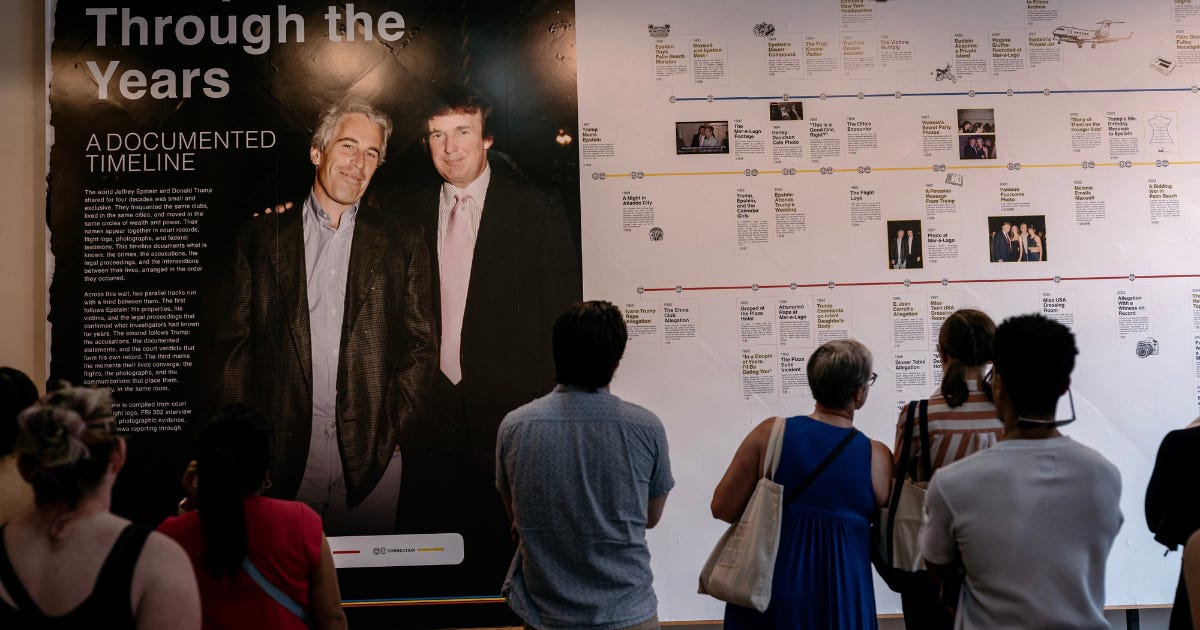
A 15-month effort to publicize every mention of Donald Trump and Mar-a-Lago in the Epstein Files could soon come to an end after a judge ruled in late September that the records in question must be released on an expedited timeline.
The ruling moves forward a July 2025 Freedom of Information Act request made by government watchdog nonprofit Democracy Defenders Fund (DDF) to the Department of Justice, seeking all records from the department’s investigative files on Epstein and his convicted accomplice, Ghislaine Maxwell, that mention Trump or his Florida resort.
Over 3 million investigative files have been released since the request was first filed, as a result of the Epstein Files Transparency Act (EFTA). Interestingly, the DOJ has not argued that those releases satisfy the demands of the request, which, according to DDF Senior Counsel Taryn Null, is a clear sign that the DOJ is violating EFTA and purposefully withholding information about Trump.
“Although the Epstein Files Transparency Act required that the DOJ publicly release all unclassified documents from the Epstein Files by December 12, 2025, there were whole categories of documents we requested in our FOIA requests that were not released,” Null said. “Moreover, DOJ did not comply with EFTA’s requirement to provide information on documents withheld and a summary of all the redactions made.”
In addition to records mentioning Trump and Mar-a-Lago, US District Judge Colleen Kollar-Kotelly sided with DDF in its request for the release of internal communications between certain members of the administration. The judge narrowly tailored the list of names, however, to those who appear to be most involved in what members of Congress have called “the most egregious cover-up in American history”: Pam Bondi, Todd Blanche, Emil Bove, Kash Patel, and Dan Bongino.
Despite the judge’s order that the DOJ expedite the request, however, the actual timeline remains unclear. While the order puts DDF’s request on the top of the list, there is no definition of how long an expedited request should take, and Kollar-Kotelly has not, at this time, set any deadlines.
As a comparison, Null explained that on another request she had worked on, the DOJ said it could only process 250 documents per month — a pace that would take 16 months for Null to receive the full 4,000 files. Ultimately, the parties compromised and agreed on a timeline of 750 pages per month. At that rate, however, it would take more than 600 years to process the 6 million records that comprise the Epstein Files.
Null and her colleagues are hoping for a much more expedited timeline this time around.
“Stalling has been the administration’s tactic to keep these files from the public. That stops now,” Norm Eisen, co-founder and executive chair of DDF, said in a statement. “We will hold the DOJ to this court ruling, and we will keep pushing until Americans can see the records with their own eyes and judge the contents of the files for themselves.”
The process of compiling mentions of Trump should be relatively straightforward, as the DOJ last year assigned 1,000 agents to work around-the-clock cataloging every mention of the president before redacting them from public view. And it’s a process that should begin soon: Null said the three legal stall tactics at the administration’s disposal — Rule 54(b), interlocutory certification, and the collateral order doctrine — are unlikely to succeed.
What’s really happening at the Supreme Court?
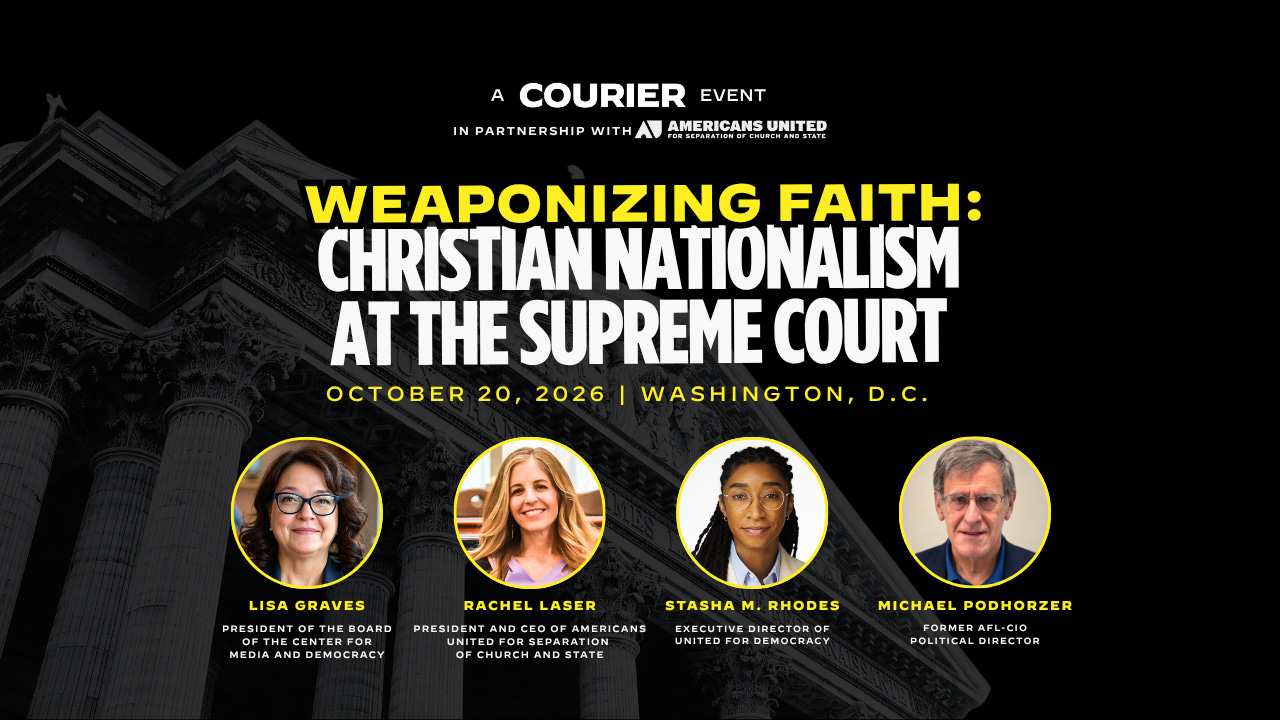
Join COURIER and Americans United on October 20 for Weaponizing Faith: Christian Nationalism at the Supreme Court. Featuring Rachel Laser, Stasha M. Rhodes, Michael Podhorzer, and moderator Lisa Graves, this panel uncovers how political allies are reshaping our legal system and what we must do to reclaim it.
Attend in person at The Milton Theatre in D.C. or watch the live stream online. RSVP today!
Support our journalism at COURIER
Democracy dies behind a paywall, which is why our journalism is — and always will be — free.
But to keep our commitment to the free access to information, we need support from those who have the means, believe in our mission, and support our unique model.