

FBI Director killed Epstein case after review of less than 7% of investigation files
Internal DOJ emails reveal Patel’s decision to end the investigation did not include financial documents, personal communications, or a majority of witness testimony.

Internal communications from the Department of Justice reveal that the decision to close the investigation into Jeffrey Epstein was made after a narrowly focused review of less than 7% of the case files, centered entirely on photo and video evidence.
FBI Director Kash Patel tasked agents in March 2025 to “determine if there are any images of individuals on any videos which should be considered for prosecution,” according to emails published as part of the Epstein Files Transparency Act. The resulting review examined an estimated 400,000 of the 6 million files compiled against Epstein and did not include financial documents, personal communications, or a majority of witness testimony.
The review was conducted by an agent working out of the DOJ’s Southern District of New York office and completed within a few hours of the request. It supposedly found no evidence implicating anyone other than Epstein and his now-convicted accomplice, Ghislaine Maxwell.
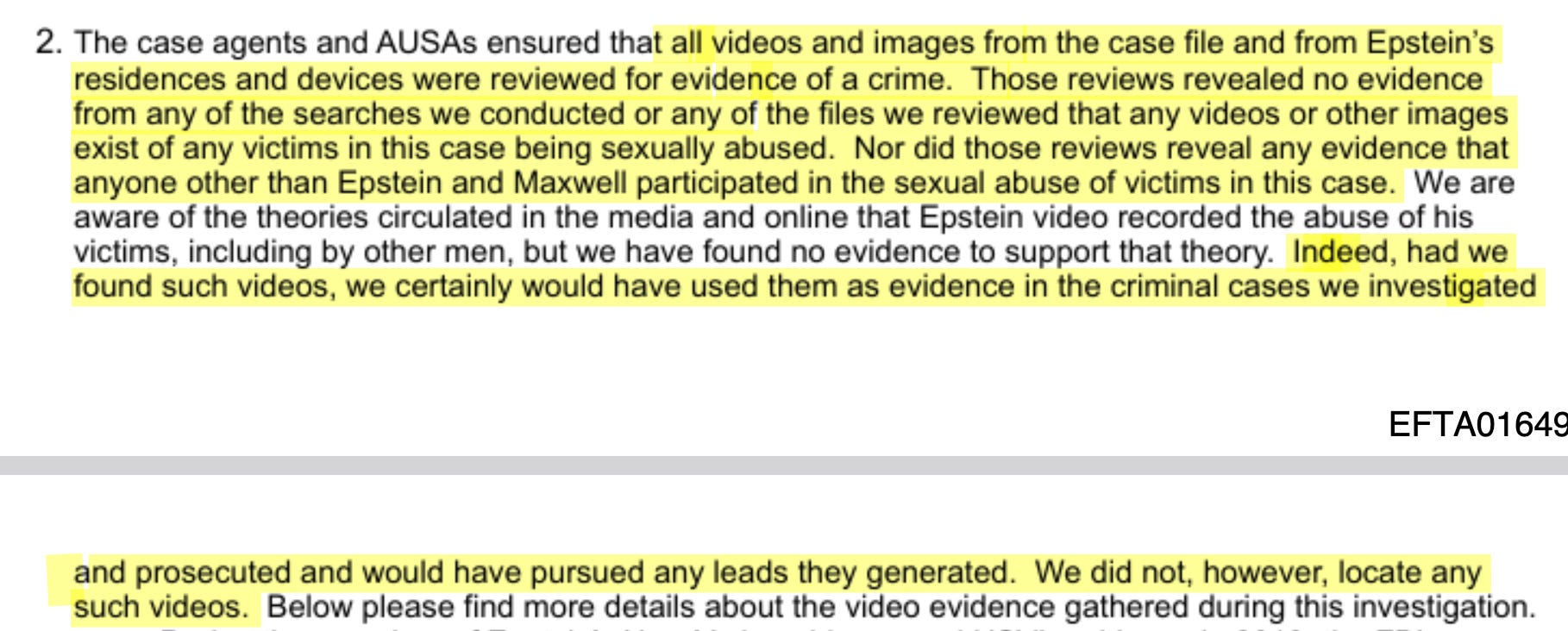
“All videos and images from the case file and from Epstein’s residences and devices were reviewed for evidence of a crime,” the agent wrote in their analysis. “Those reviews revealed no evidence from any of the searches we conducted or any of the files we reviewed that any videos or other images exist of any victims in this case being sexually abused. Nor did those reviews reveal any evidence that anyone other than Epstein and Maxwell participated in the sexual abuse of victims in this case.”
The internal memo sheds new light on the agency’s abrupt decision to end its investigation into Epstein’s multi-billion dollar sex trafficking operation, and adds context to the public memo on the matter that many derided as woefully insufficient. In the analysis, the agent emphasized that their determinations were made exclusively based on visual evidence, and even that was limited to include investigations specific to the SDNY.
The review omitted all surveillance footage, for example, as the 2019 search warrant executed at Epstein’s properties only authorized confiscation of evidence related to crimes committed within the preceding 20 years. Witness testimony was also severely limited: anything other than on-camera interviews with the Palm Beach Police department was not considered.
The language in Patel’s official FBI memo announcing the closure of the investigation mirrors the internal analysis almost identically, and a reexamination of the text suggests the video and image elements were the only determining factors.
“The files relating to Epstein include a large volume of images of Epstein, images and videos of victims who are either minors or appear to be minors, and over ten thousand downloaded videos and images of illegal child sex abuse material and other pornography. Teams of agents, analysts, attorneys, and privacy and civil liberties experts combed through the digital and documentary evidence” the memo stated. “This systematic review revealed no incriminating ‘client list.’ There was also no credible evidence found that Epstein blackmailed prominent individuals as part of his actions. We did not uncover evidence that could predicate an investigation against uncharged third parties.”
The DOJ and FBI did not respond to requests for comment on this story.
The decision to close the investigation into Epstein’s criminal enterprise without pursuing additional inquiries into potential accomplices or co-conspirators was seen as a miscarriage of justice by survivors, witnesses, and members of Congress, particularly after the DOJ acknowledged that there were “over one thousand victims” connected to the case.
Two weeks after the investigation was closed, Democrats on the House Oversight Committee forced a vote to open an inquiry into the government’s handling of the files. Patel’s decision not to pursue charges based on a small, selective portion of evidence reinforces committee members’ assertion that the DOJ has been involved in a cover-up to protect those implicated from harm.
“This is obviously really concerning. We have a lot of questions about this,” said Rep. Robert Garcia (D-CA), ranking member of the Oversight Committee. “We have some other information as it relates to the FBI director and the way he’s mismanaged the redaction process, so there are a lot of questions for Kash Patel, including the really serious ones that you raised. And so this is why Kash Patel has got to be in front of the committee, and he’s got to answer our questions.”
On Tuesday, Garcia sent a letter to committee chair Rep. James Comer (R-KY) requesting that Patel and acting Attorney General Todd Blanche be brought in for questioning.
 Tiktok failed to load.
Enable 3rd party cookies or use another browser
Patel and Blanche were repeatedly referenced by former Attorney General Pam Bondi during her recent interview with the committee, during which she redirected nearly all criticism to her subordinates. According to Bondi, Blanche handled the day-to-day affairs of the Epstein investigation — including transferring convicted sex trafficker Ghislaine Maxwell to a more desirable prison with low security and luxurious amenities — while Patel oversaw the consolidation of the files and redaction process.
“Pam Bondi deflected to Todd Blanche over 30 times. I mean, it was crazy how often she would put the blame on Blanche. So, if that’s going to be the case, we want to talk to Blanche. We want to understand why Bondi was saying that Blanche was the one in charge of the redactions, in charge of the investigation. He has questions to answer,” said Garcia. “She did mention Patel numerous times on the FBI redaction side. And so we have questions obviously for Kash Patel. These are people that we want to talk to as soon as possible.”
Survivors of Epstein’s abuse have also come forward in support of Garcia’s request, demanding answers as to why they were never contacted by the DOJ as part of its investigation and why the FBI failed to redact personal and identifying information about them while adding redactions to the names of those implicated in criminal activity.

COURIER’s newly-launched Epstein investigation project
For too long, the Epstein Class has dealt in wealth, power, and politics to avoid accountability and deny victims & survivors their due justice. The public deserves the truth, but the Trump Administration is failing its legal obligation to deliver it.
That’s why we’re expanding our coverage to follow the money and investigate the power players in and outside the government. With a new database by Thorian AI, we have unprecedented access and ability to navigate more than 1.2M files and we’re sharing access—and what we’re finding—with you.
Subscribe to The Cover-Up and get one concise, easy-to-read email a week that cuts through the noise with the headlines you need and the breakdowns you want.
By staying plugged in and leveraging our reporting to make your own calls-to-action louder, together, we can turn information into justice.
Advertise in this newsletter
Do you or your company want to support COURIER’s mission and showcase your products or services to an aligned audience of 190,000+ subscribers at the same time? Contact advertising@couriernewsroom.com for more information.
Support our journalism at COURIER
Democracy dies behind a paywall, which is why our journalism is — and always will be — free.
But to keep our commitment to the free access to information, we need support from those who have the means, believe in our mission, and support our unique model.
Of course he did, he is completely incompetent for his job…