


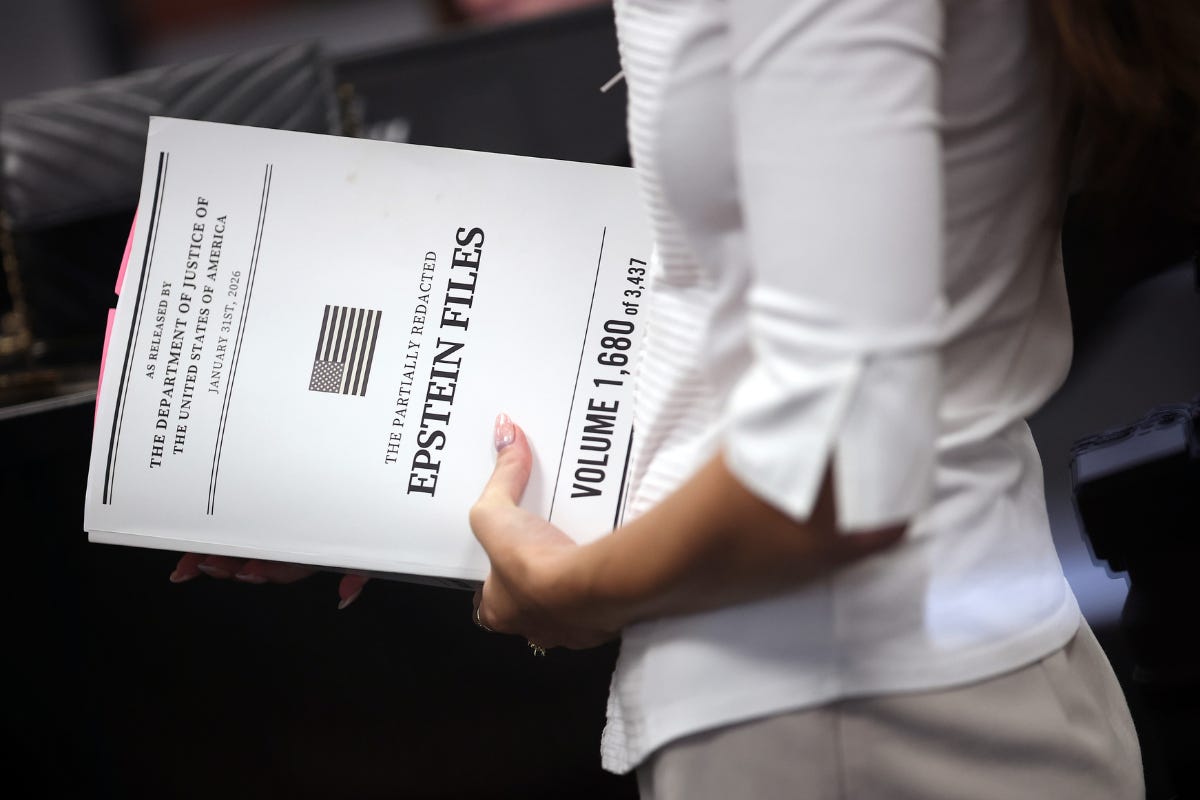
For months, the Department of Justice has refused to publicly release a section of the Epstein Files containing handwritten notes from an FBI interview with one of Epstein’s victims — but last week, some of those notes were found posted online, uploaded by a conservative journalist who received them from a DOJ employee.
The 37 pages of handwritten notes have been the subject of speculation, criticism, and lawsuits over the DOJ’s stewardship of the Epstein Files. Attorney General Todd Blanche has blocked the publication of millions of investigative files the DOJ has on Epstein, including the handwritten interview notes, claiming they are merely duplicative of records that have already been released. But an unredacted copy of the notes, uploaded to the document hosting site Scribd by Washington Examiner reporter Kaelan Deese, reveals enough discrepancies between what they contain and what was already public to cast Blanche’s entire defense into question.
“There are a few details that wouldn’t have needed to be redacted,” said Dr. Rye Howard-Stone, a computer scientist who tracked the origin of the leaked notes and verified their authenticity. “There’s a road trip to New Jersey, a school trip to Washington DC, and then the names of corroborating witnesses she gave the FBI — who, according to the Post and Courier, were never contacted. Obviously, the names of the witnesses should be redacted. But the fact that there are, or potentially are, uncontacted witnesses is important.”
Blanche has repeatedly invoked the duplicative defense since Congress passed the Epstein Files Transparency Act, claiming that — contrary to the law as it’s written — he can withhold any duplicate records since the information they contain has already been published. However, even by Blanche’s own standard, there appears to be no legal reason to withhold the notes from Doe 4’s interview, as the leaked documents disprove the notion that the information would be redundant.
In fact, releasing duplicative records does not appear to have been a consistent concern to the DOJ at all when deciding what to release. An independent analysis by COURIER and ThorianAI found that at least 40% of the DOJ’s Epstein Library consists of duplications. The outlet has added a “deduplication” feature to its Epstein Files database that shows users how many duplicates or variants exist of each file. Instead, Blanche’s top priority seems to be preventing the release of any information that could implicate Trump.

“There have been no saving graces in the DOJ’s handling of the Epstein files,” said Howard-Stone. “This is just yet another example in a long chain of miscarriages of justice in this case by the government.
The discovery of the fully unredacted notes is the latest revelation in a bizarre saga involving allegations against Epstein and Trump. The omission of Doe 4’s FBI interviews were first discovered in February, when independent journalist Roger Sollenberger found references to them in the Epstein Files, but the interviews themselves were nowhere to be found. American Freakshow Nina Burleigh and Katie Chenoweth dug deeper and found that Doe had been labeled a protected source, a designation typically reserved for informants who provide credible information involving high-profile individuals.
The DOJ initially — and falsely — claimed the information was duplicative, but ultimately conceded and released the typed interview reports, known as FD-302s, in early March. The typed reports revealed new and graphic allegations against Trump, including that he raped and beat Doe 4 when she was a young teen. Early drafts of the report — handwritten notes investigators took while interviewing Doe 4 — remained withheld, with the DOJ once again arguing that the information they contained was redundant.
“The Department has not produced underlying handwritten notes for FD-302 interview reports because, by their nature, the underlying notes are substantially similar to the ultimate reports, and have accordingly been deemed duplicative of the typewritten reports memorializing the interviews,” Blanche wrote in a court filing on the matter. “Their handwritten nature further complicates the redaction process and increases the risk of inadvertent disclosure of victim [personal identifying information].”
On March 6, the same day the DOJ released the typed interview notes, Deese uploaded the handwritten versions to Scribd. It remains unclear whether he received an embargoed copy of the released documents that erroneously included the notes or whether a DOJ employee leaked them in secret. Deese didn’t mention the notes in an article published the following day and has not responded to requests for comment on this story.
In April, independent journalist Katie Phang sued Blanche over the release of the handwritten notes, as well as a number of other omissions she argued represented the government’s failure to comply with the Epstein Files Transparency Act. While the case remains ongoing, US District Judge Emmet Sullivan found in June that the DOJ was in violation of the law, and chastised Blanche and government attorneys for ignoring court orders intended to bring him back into compliance.
Support our journalism at COURIER
Democracy dies behind a paywall, which is why our journalism is — and always will be — free.
But to keep our commitment to the free access to information, we need support from those who have the means, believe in our mission, and support our unique model.

COURIER’s newly-launched Epstein investigation project
For too long, the Epstein Class has dealt in wealth, power, and politics to avoid accountability and deny victims & survivors their due justice. The public deserves the truth, but the Trump Administration is failing its legal obligation to deliver it.
That’s why we’re expanding our coverage to follow the money and investigate the power players in and outside the government. With a new database by Thorian AI, we have unprecedented access and ability to navigate more than 1.2M files and we’re sharing access—and what we’re finding—with you.