


An unknown number of handwritten materials contained within the government’s case file on Jeffrey Epstein have been intentionally withheld from public view, according to a court brief filed earlier this month by Acting US Attorney General Todd Blanche.
The admission came in response to a lawsuit filed by independent journalist Katie Phang, who has accused the Department of Justice of obscuring portions of the Epstein Files, in direct violation of the Epstein Files Transparency Act. Phang asked the courts to force the DOJ to remove certain redactions and release handwritten notes referenced throughout the files.
“Plaintiff respectfully requests that the Court provide the following relief,” Phang’s lawsuit states. “Remove all unlawful redactions; explain the bases for any remaining lawful redactions; re-produce all materials that were produced but then unlawfully retracted; produce all materials that have not been produced that, by law, should be.”
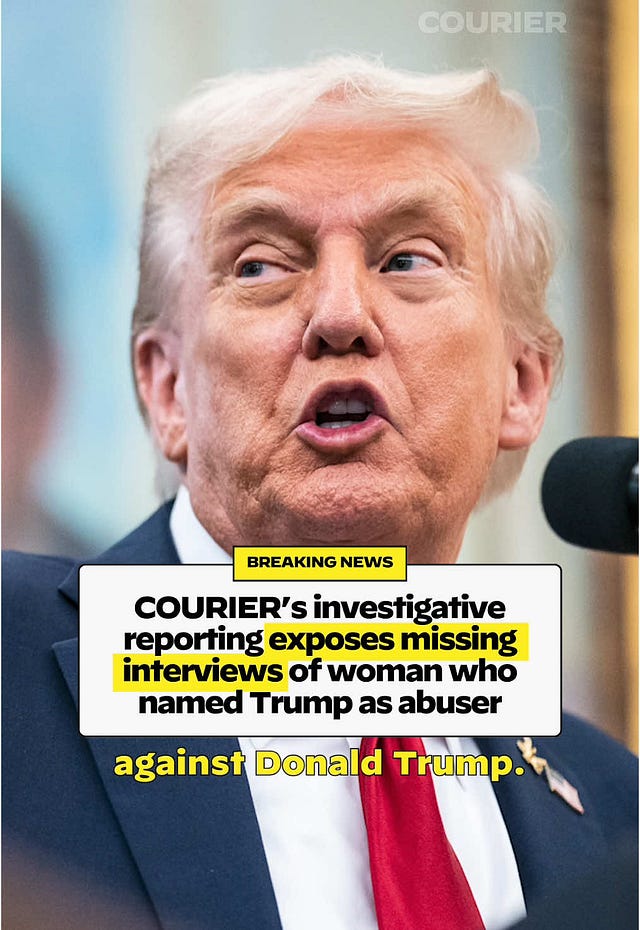
The published files repeatedly reference handwritten materials, including detailed memos Epstein wrote about his criminal network and investigators’ accounts of witness testimony that contain greater detail than what is found in the typed reports. Law enforcement used a handwritten paper trail to build their 2006 case in Palm Beach, and investigators’ notes obtained by the Post and Courier provide incriminating information from a victim who alleged President Donald Trump had her trafficked across state lines to him on multiple occasions when she was a minor.
Those handwritten records have not been released by the DOJ, and the typed report documenting the woman’s allegations against Trump appears to be a watered-down version of what prosecutors were told.
 Tiktok failed to load.
Enable 3rd party cookies or use another browser
Marina Lacerda, an Epstein survivor whom law enforcement tracked down after finding a handwritten note with her name in his trash, said Epstein kept a ledger documenting his cash payments. He also detailed gifts to girls paid by check, such as money for rent or medical visits. A prosecution memorandum confirms that law enforcement obtained the notes Epstein kept on his trafficking expenses, but the DOJ has not published the notes themselves.
“He did write checks and stuff — he did write also in a book,” Lacerda said. “West Palm [Police] found me was because he threw my name away in the garbage, fucking idiot. He threw my name out with something about me getting paid.”
The omissions appear to be a direct violation of the Epstein Files Transparency Act, a law passed by Congress last year requiring the DOJ to release the entirety of its investigation into Epstein, subject only to narrow exceptions for victims’ personal information and matters of national security. Blanche’s decision could also violate prior court rulings maintaining that the government is required to turn over agents’ interview notes should those notes contain any information not included in the final typed reports.
In response to Phang’s lawsuit, Blanche admitted that his department intentionally withheld handwritten notes, claiming that releasing them could violate the privacy of Epstein’s victims and that the information they contain is already found elsewhere in the published portion of the Epstein Files.
“The Department has not produced underlying handwritten notes for FD-302 interview reports because, by their nature, the underlying notes are substantially similar to the ultimate reports, and have accordingly been deemed duplicative of the typewritten reports memorializing the interviews,” the court filing states. “Their handwritten nature further complicates the redaction process and increases the risk of inadvertent disclosure of victim [personally identifiable information].”
But discrepancies between the handwritten and typed accounts of Trump’s alleged abuse undermine Blanche’s claim that the documents are merely redundant. This would not be the first time the acting attorney general (who is also Trump’s former personal attorney) has attempted to suppress information that connects Epstein to the president. FBI agents were instructed to redact mentions of Trump before the files were released. As first reported by the American Freakshow, the DOJ initially omitted the interview with the woman who claims Trump had her trafficked to him, and after the omission was uncovered, published only the typed version, which left out details found in the handwritten notes.
Blanche’s admission comes just days before his two-day confirmation hearing before the Senate Judiciary Committee, which begins July 15. His handling of the release of the Epstein Files will be a centerpoint of the hearing, as many in Congress believe Blanche is involved in a widespread cover-up in order to protect Trump.
“Blanche oversaw the department’s abysmal release of the Trump/Epstein files,” US Sen. Sheldon Whitehouse wrote in an op-ed for The Contrarian. “The redactions were a mess, exposing victims’ identifying information. Serious, credible allegations against Trump were withheld. After stellar reporting by journalists discovered DOJ’s omissions, DOJ released some of the files about the Trump allegations. But even now, files are still being held back.”


COURIER’s newly-launched Epstein investigation project
For too long, the Epstein Class has dealt in wealth, power, and politics to avoid accountability and deny victims & survivors their due justice. The public deserves the truth, but the Trump Administration is failing its legal obligation to deliver it.
That’s why we’re expanding our coverage to follow the money and investigate the power players in and outside the government. With a new database by Thorian AI, we have unprecedented access and ability to navigate more than 1.2M files and we’re sharing access—and what we’re finding—with you.
Subscribe to The Cover-Up and get one concise, easy-to-read email a week that cuts through the noise with the headlines you need and the breakdowns you want.
By staying plugged in and leveraging our reporting to make your own calls-to-action louder, together, we can turn information into justice.
Slouch!